I’ve gone through the official doc. I’m having a hard time understanding what this function is used for and how it works. Can someone explain this in layman’s terms?
Answers:
Thank you for visiting the Q&A section on Magenaut. Please note that all the answers may not help you solve the issue immediately. So please treat them as advisements. If you found the post helpful (or not), leave a comment & I’ll get back to you as soon as possible.
Method 1
unfold imagines a tensor as a longer tensor with repeated columns/rows of values ‘folded’ on top of each other, which is then “unfolded”:
sizedetermines how large the folds arestepdetermines how often it is folded
E.g. for a 2×5 tensor, unfolding it with step=1, and patch size=2 across dim=1:
x = torch.tensor([[1,2,3,4,5],
                  [6,7,8,9,10]])
>>> x.unfold(1,2,1)
tensor([[[ 1,  2], [ 2,  3], [ 3,  4], [ 4,  5]],
        [[ 6,  7], [ 7,  8], [ 8,  9], [ 9, 10]]])
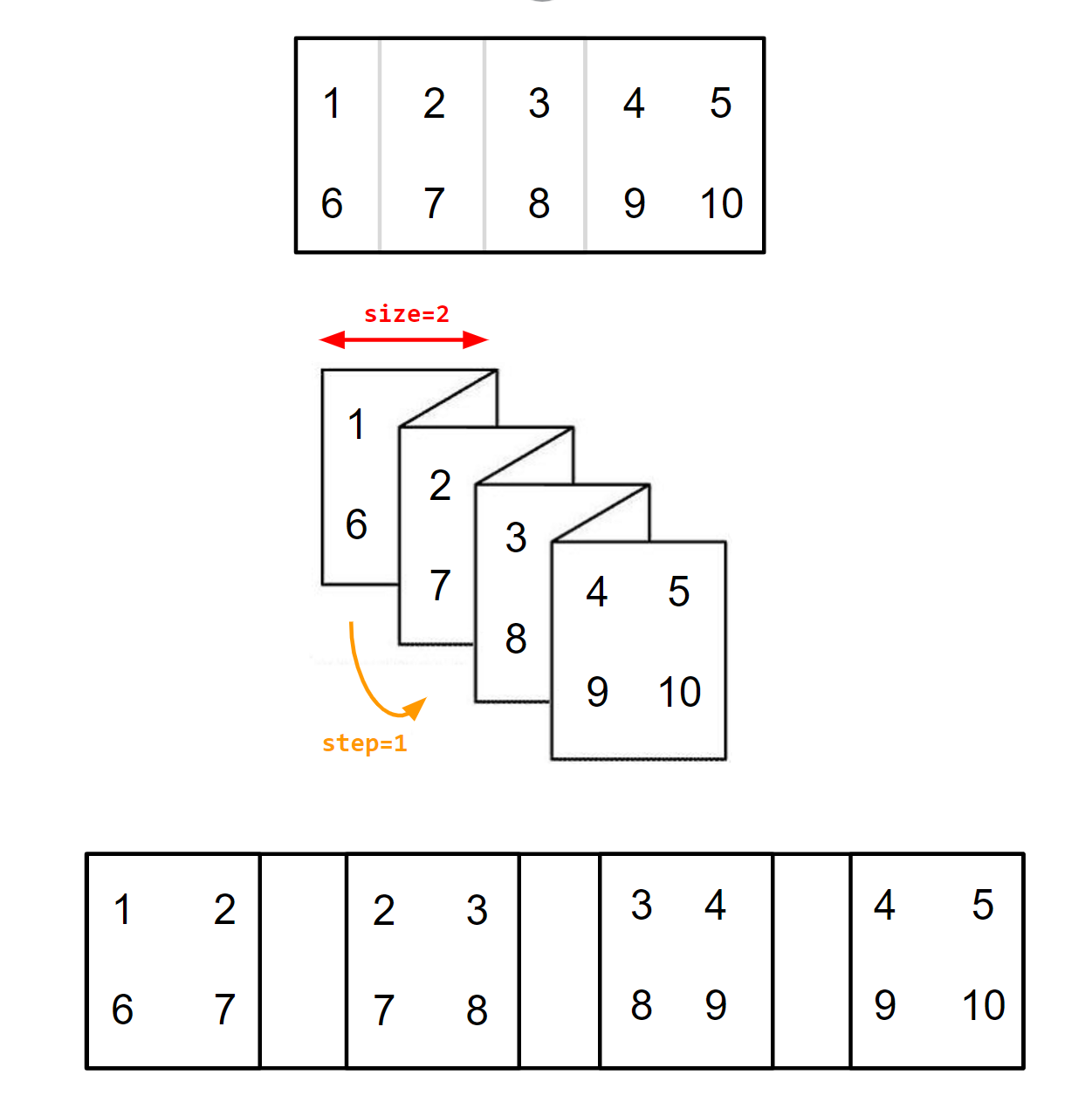
fold is roughly the opposite of this operation, but “overlapping” values are summed in the output.
Method 2
The unfold and fold are used to facilitate “sliding window” operations (like convolutions). Suppose you want to apply a function foo to every 5x5 window in a feature map/image:
from torch.nn import functional as f
windows = f.unfold(x, kernel_size=5)
Now windows has size of batch-(55x.size(1))-num_windows, you can apply foo on windows:
processed = foo(windows)
Now you need to “fold” processed back to the original size of x:
out = f.fold(processed, x.shape[-2:], kernel_size=5)
You need to take care of padding, and kernel_size that may affect your ability to “fold” back processed to the size of x. Moreover, fold sums over overlapping elements, so you might want to divide the output of fold by patch size.
Method 3
One dimensional unfolding is easy:
x = torch.arange(1, 9).float()
print(x)
# dimension, size, step
print(x.unfold(0, 2, 1))
print(x.unfold(0, 3, 2))
Out:
tensor([1., 2., 3., 4., 5., 6., 7., 8.])
tensor([[1., 2.],
        [2., 3.],
        [3., 4.],
        [4., 5.],
        [5., 6.],
        [6., 7.],
        [7., 8.]])
tensor([[1., 2., 3.],
        [3., 4., 5.],
        [5., 6., 7.]])
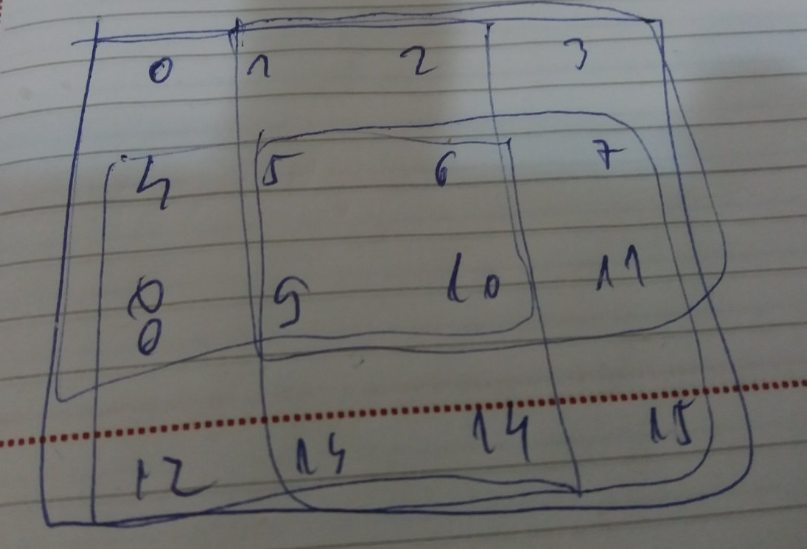
Two dimensional unfolding (also called patching)
import torch
patch=(3,3)
x=torch.arange(16).float()
print(x, x.shape)
x2d = x.reshape(1,1,4,4)
print(x2d, x2d.shape)
h,w = patch
c=x2d.size(1)
print(c) # channels
# unfold(dimension, size, step)
r = x2d.unfold(2,h,1).unfold(3,w,1).transpose(1,3).reshape(-1, c, h, w)
print(r.shape)
print(r) # result
tensor([ 0.,  1.,  2.,  3.,  4.,  5.,  6.,  7.,  8.,  9., 10., 11., 12., 13.,
        14., 15.]) torch.Size([16])
tensor([[[[ 0.,  1.,  2.,  3.],
          [ 4.,  5.,  6.,  7.],
          [ 8.,  9., 10., 11.],
          [12., 13., 14., 15.]]]]) torch.Size([1, 1, 4, 4])
1
torch.Size([4, 1, 3, 3])

tensor([[[[ 0.,  1.,  2.],
          [ 4.,  5.,  6.],
          [ 8.,  9., 10.]]],


        [[[ 4.,  5.,  6.],
          [ 8.,  9., 10.],
          [12., 13., 14.]]],


        [[[ 1.,  2.,  3.],
          [ 5.,  6.,  7.],
          [ 9., 10., 11.]]],


        [[[ 5.,  6.,  7.],
          [ 9., 10., 11.],
          [13., 14., 15.]]]])
All methods was sourced from stackoverflow.com or stackexchange.com, is licensed under cc by-sa 2.5, cc by-sa 3.0 and cc by-sa 4.0