Peak detection in a 2D array
I’m helping a veterinary clinic measuring pressure under a dogs paw. I use Python for my data analysis and now I’m stuck trying to divide the paws into (anatomical) subregions.
I’m helping a veterinary clinic measuring pressure under a dogs paw. I use Python for my data analysis and now I’m stuck trying to divide the paws into (anatomical) subregions.
I recently learned about strides in the answer to this post, and was wondering how I could use them to compute a moving average filter more efficiently than what I proposed in this post (using convolution filters).
Here’s what I would like to do:
I have a transparent png image “foo.png”
and I’ve opened another image with
Below is my python code for tracking white color objects. It works – but only for a few seconds and then the whole screen turns black and in some times it not work. I experimented with blue color and it works – but white and green are giving me problems:
I’m trying to convert image from PIL to OpenCV format. I’m using OpenCV 2.4.3.
here is what I’ve attempted till now.
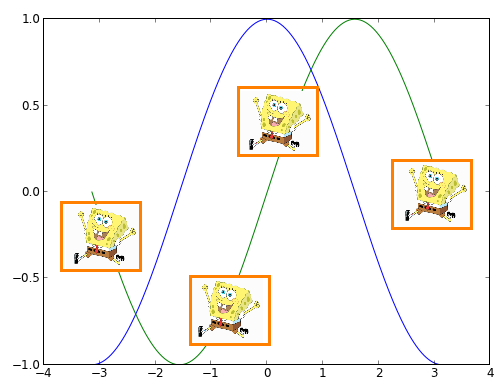
I want to read a list of images into Python/Matplotlib and then plot this images instead of other markers (like points) in a graph. I have tried with imshow but I didn’t succeed, because I cannot shift the image to another position and scale it appropriately. Maybe somebody has a good idea : )
Q: How to speed this up?
I am studying image-processing using Numpy and facing a problem with filtering with convolution.
How can I apply mask to a color image in latest python binding (cv2)? In previous python binding the simplest way was to use cv.Copy e.g.